What Is Buy Now, Pay Later (BNPL)? How It Works and What to Watch For
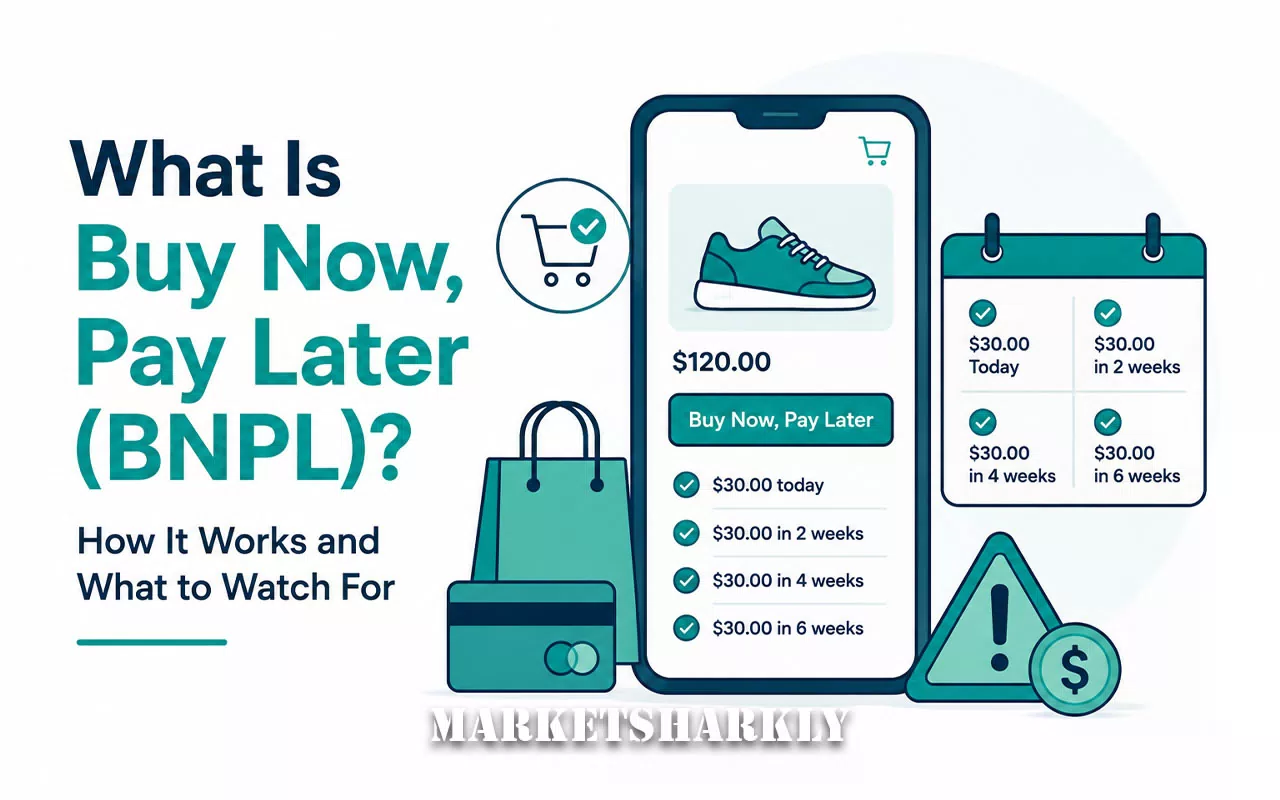
Buy Now, Pay Later — BNPL — lets you split a purchase into a small number of installments, typically at checkout, often with no interest charged if you pay on schedule. It's become one of the fastest-growing ways Americans pay for everyday purchases, and it sits in a genuinely unusual regulatory position: it looks like a credit card in some ways, but the consumer protections that apply to it have been shifting.
Here's how BNPL actually works, what's true about the "interest-free" pitch, and where the regulatory ground currently stands.
How a Typical BNPL Purchase Works
The most common BNPL structure is often called Pay-in-Four: you make a purchase, pay roughly 25% of the price at checkout, and the remaining balance is split into three more equal payments, usually spaced two weeks apart, so the whole purchase is paid off in about six weeks. Providers approve purchases through a quick application at checkout — usually a much faster, lighter process than a traditional credit card application — accessed through what's generally called a digital user account.
Some BNPL providers also offer longer-term installment plans, spanning several months, which more closely resemble a traditional installment loan and are more likely to carry interest.
Is It Really Interest-Free?
For a standard Pay-in-Four plan, often yes — if you pay every installment on time. The core Pay-in-Four product usually doesn't charge a finance charge the way a credit card does, which is part of what makes it attractive.
The catch is what happens if you don't pay on time. Missing a scheduled payment can trigger a late fee, and depending on the provider and plan, some products do carry deferred or standard interest that applies if payments aren't kept current. The "interest-free" framing is generally accurate for a payment made on schedule — it's not a guarantee against every fee if something goes wrong.
Longer-term BNPL installment plans are more likely to carry an interest rate from the start, disclosed similarly to a standard loan.
The Regulatory Picture: A Moving Target
This is the part of BNPL that's genuinely unsettled, and worth understanding if you're using these products regularly.
In May 2024, the CFPB issued an interpretive rule concluding that BNPL providers offering credit through a digital user account should be treated as "card issuers" under Regulation Z — the same regulation that governs traditional credit cards. That interpretation would have extended several credit-card-style protections to BNPL users, including the right to dispute a charge and withhold payment while a dispute is investigated, and protections around billing errors.
In May 2025, under new leadership, the CFPB withdrew that interpretive rule along with several other guidance documents. Importantly, the withdrawal wasn't a declaration that the original interpretation was legally wrong — it simply removed the CFPB's formal guidance on the question. Courts remain free to consider the 2024 interpretation when deciding how existing law (the Truth in Lending Act) applies to BNPL accounts, and individual providers' own policies on disputes and refunds may still offer similar protections voluntarily, even without a current federal mandate requiring it.
The practical takeaway: the specific legal protections you have on a BNPL purchase are less standardized and less certain right now than the protections you have on a traditional credit card, and that could continue to shift. Checking the specific provider's own terms for how they handle disputes and returns is worth doing rather than assuming credit-card-equivalent protections apply automatically.
Where BNPL Differs From a Credit Card
Approval speed and criteria. BNPL approval is typically faster and can rely on different underwriting than a traditional credit card, sometimes with a lighter credit check.
Reporting to credit bureaus. Historically inconsistent — practices have varied by provider and have been evolving, so whether a given BNPL plan affects your credit report and score depends on the specific provider and plan.
Dispute rights. As described above, this is currently less standardized across providers than it is for traditional credit cards, where TILA dispute rights are well established.
Structure. A credit card is open-ended, revolving credit you can use repeatedly up to a limit. A standard Pay-in-Four BNPL plan is closed-end — tied to one specific purchase, paid off on a fixed short schedule, rather than a revolving line you draw on repeatedly.
The Risk That's Easy to Miss: Stacking
Because each BNPL purchase is a separate, small commitment spread across only a few weeks, it's easy to use several BNPL plans at once across different purchases and different providers without any single one of them feeling like a large financial commitment. Add several $75-a-payment plans together across multiple retailers, though, and the combined biweekly obligation can add up to a meaningful recurring expense that isn't necessarily visible in any one place the way a credit card statement consolidates your obligations into a single view.
Since BNPL reporting to credit bureaus has been inconsistent, this "stacking" also isn't always something that shows up clearly in a credit report the way multiple credit card balances would, which can make it easier to lose track of the total.
What to Check Before Using BNPL
What happens if you miss a payment — the specific late fee amount and whether it triggers interest
Whether the specific plan is interest-free or interest-bearing — this varies by provider and by plan length
The provider's own dispute and return policy, since federal requirements here are currently less standardized than for credit cards
How many BNPL plans you're currently juggling across different providers, since no single BNPL provider can see your commitments to the others
Frequently Asked Questions
Does BNPL affect my credit score?
It depends on the provider and plan — reporting practices to the major credit bureaus have varied and have been evolving, so a BNPL plan may or may not appear on your credit report depending on who you're using.
Do I have the same dispute rights as a credit card if something goes wrong?
Not necessarily, and currently less consistently than with a credit card. A 2024 federal interpretation suggested similar rights should apply, but that guidance was withdrawn in 2025 without a replacement, leaving the legal picture less settled. Check the specific provider's own policy.
Is a longer-term BNPL loan the same as a Pay-in-Four plan?
No. Pay-in-Four plans are typically short (about six weeks) and interest-free if paid on schedule. Longer-term BNPL installment plans, sometimes spanning several months, more closely resemble a standard loan and are more likely to carry disclosed interest.
Can using multiple BNPL plans at once hurt me financially?
It can, mainly by making your total recurring obligations harder to track, since no individual provider sees what you owe elsewhere and reporting to credit bureaus hasn't been consistent enough to reliably surface the full picture.
What happens if I return an item bought with BNPL?
This depends entirely on the specific provider's return and refund policy. Since consistent federal dispute protections aren't currently guaranteed the way they are for credit cards, it's worth checking a provider's stated return process before purchasing rather than assuming it works identically to a credit card refund.
Key Takeaways
BNPL splits a purchase into a small number of payments, most commonly an interest-free Pay-in-Four plan, but the consumer protections around it are currently less standardized than those built into traditional credit cards — a 2024 federal interpretation extending credit-card-style rights was withdrawn in 2025 without being replaced.
The product itself isn't inherently risky when used deliberately and paid on schedule. The risks tend to come from missed-payment fees, providers that do charge interest depending on the plan, and the ease of stacking several small commitments across different providers without a single, consolidated view of what you actually owe.
Sources
Consumer Financial Protection Bureau — Buy Now, Pay Later (BNPL) Products
Federal Register — Interpretive Rules, Policy Statements, and Advisory Opinions; Withdrawal
This article is for general educational purposes only and does not constitute financial, investment, tax, or legal advice.
Last updated: August 2026