What Is a Minimum Credit Card Payment?
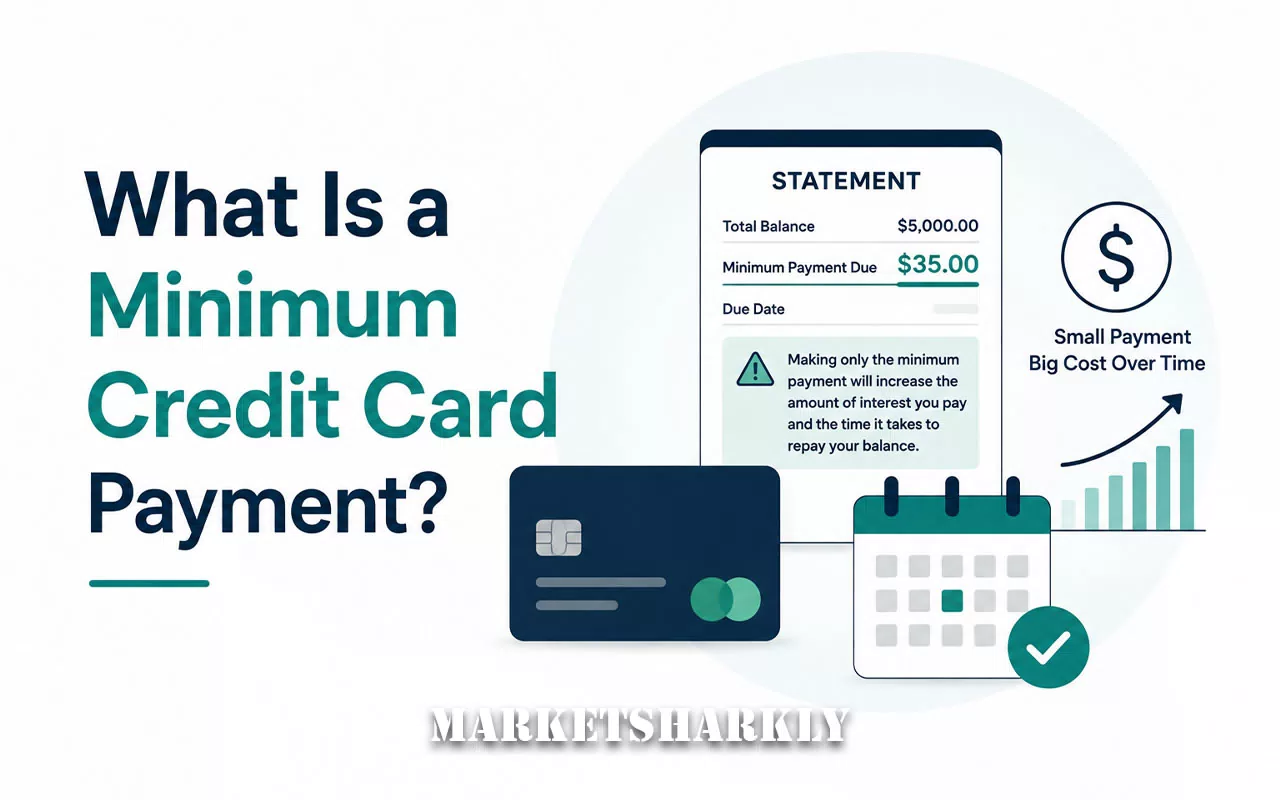
The minimum payment is the smallest amount you're required to pay by your due date to keep a credit card account in good standing. It's not designed to pay off your balance in any reasonable timeframe — it's designed to be the floor, not a repayment plan, and the gap between those two things is bigger than most people expect.
How Minimum Payments Are Actually Calculated
There's no single federal formula for minimum payments — each issuer sets its own in the cardholder agreement — but most fall into one of two general approaches.
Flat percentage of balance. The issuer calculates a set percentage of your total statement balance, commonly somewhere in the 1%–4% range, with interest and fees already effectively folded into that percentage.
Percentage plus interest and fees. The issuer takes a smaller percentage of your balance — often around 1% — and adds that period's accrued interest, plus any fees, on top.
Either way, most issuers also apply a floor: a fixed minimum dollar amount (commonly somewhere between $25 and $40) that applies whenever the percentage-based calculation would come out lower than that floor. If your statement balance itself is smaller than the floor amount, the full balance simply becomes your minimum payment.
A typical cardholder agreement might read something like: "the greater of $35, or 1% of your balance plus interest and fees charged that cycle." Different issuers phrase and structure this differently, so the specific formula for your card is in your own account agreement, not a universal rule.
Why the Minimum Payment Changes Every Month
If your minimum payment is a percentage of your balance, it moves as your balance moves — which means it doesn't stay fixed even if you never make another purchase. As you pay down the balance, the percentage-based portion of the minimum shrinks along with it.
This is part of what makes minimum-payment-only repayment so slow: because the required payment keeps getting smaller as the balance shrinks, an ever-larger share of each new (smaller) payment goes toward interest rather than principal, especially in the later stages of paying down a balance this way.
The Minimum Payment Trap
Here's what minimum-only payments actually look like in practice. Take a $5,000 balance at 22% APR, with a minimum payment set at 1% of the balance plus that month's interest, subject to a $35 floor, and assume no new charges are added.
Paying only that calculated minimum every month, it would take roughly 16 years to pay off the balance, and you'd pay about $7,670 in interest — more than the original $5,000 you borrowed — on top of repaying the $5,000 itself.
That's the mechanism at work: a shrinking required payment against a balance that keeps compounding interest in the meantime (as covered in how credit card interest actually accrues) stretches repayment out far longer, and costs far more, than the size of the original balance would suggest.
Why Your Statement Has to Warn You About This
Since the Credit CARD Act of 2009 took effect, federal law has required credit card statements to include a minimum payment warning — a statement, in bold, along the lines of: making only the minimum payment will increase the amount of interest you pay and the time it takes to repay your balance.
Alongside that warning, statements are required to show, based on your current balance, an estimate of how many months it would take to pay off the balance making only minimum payments, and the total cost (principal plus interest) of doing so. In most cases, issuers must also show what the monthly payment would need to be to pay off the balance in 36 months instead, along with the total cost and savings of that faster path, so you can see the two scenarios side by side rather than relying on your own math.
Cards where the minimum payment estimate already comes out to three years or less generally aren't required to show the 36-month comparison, since minimum payments in that case wouldn't take meaningfully longer than the accelerated example anyway.
What Happens If You Pay Less Than the Minimum
Paying less than the required minimum, or missing the payment entirely, can trigger a late fee, and it's typically reported to the credit bureaus, which can affect your credit score. Some cardholder agreements also allow the issuer to apply a higher penalty APR after a missed or late payment, which can apply going forward and, depending on the agreement, potentially to the existing balance as well.
Paying at least the minimum by the due date keeps the account in good standing, even if it does very little to reduce what you actually owe.
Minimum Payment vs. Paying in Full
These aren't two points on the same spectrum — they behave completely differently. Paying your statement balance in full by the due date, when your card has an active grace period, means you avoid interest entirely for that cycle. Paying only the minimum means you're carrying a balance, which means daily interest accrual applies to whatever's left — the minimum payment doesn't pause or reduce that accrual, it just satisfies the "don't go delinquent" requirement.
In other words, the minimum payment protects your account status. It does essentially nothing to protect you from the cost of carrying the balance.
Frequently Asked Questions
Is the minimum payment the same on every card?
No. Each issuer sets its own formula and floor amount in the cardholder agreement, so minimum payments can differ meaningfully between cards even with similar balances and APRs.
Does paying the minimum hurt my credit score?
Paying at least the minimum on time generally keeps your account in good standing, which is good for your credit. However, carrying a high balance relative to your credit limit — which minimum-only payments tend to prolong — can hold your credit utilization high, which can weigh on your score separately from your payment history.
Why did my minimum payment go down even though I didn't pay much last month?
If your minimum is calculated as a percentage of your balance, a shrinking balance produces a shrinking minimum, even if very little of your prior payment actually went to principal.
Does the 36-month figure on my statement mean I have to pay it?
No, it's a required disclosure showing what a faster payoff would look like and cost, for comparison. You're only required to pay the actual minimum payment amount listed separately on the statement.
Is it ever fine to pay only the minimum?
Occasionally, if you're confident you'll pay off the balance soon after and it's a short-term gap rather than an ongoing pattern, it won't cause serious harm. As an ongoing strategy, minimum-only payments are structurally designed to maximize how long you carry — and pay interest on — a balance.
Key Takeaways
A minimum credit card payment is calculated from your balance — as a flat percentage, or a smaller percentage plus that period's interest and fees — subject to a dollar floor, and it shrinks as your balance shrinks. Federal law requires your statement to disclose what minimum-only payments would actually cost you in time and interest, specifically because that cost tends to be far higher than the size of the minimum payment itself suggests.
Meeting the minimum keeps your account in good standing. It isn't, on its own, a repayment plan — and treating it like one is usually the most expensive way to carry a credit card balance.
Sources
This article is for general educational purposes only and does not constitute financial, investment, tax, or legal advice.
Last updated: August 2026