What Is a 1031 Exchange? How to Defer Capital Gains Tax on Real Estate
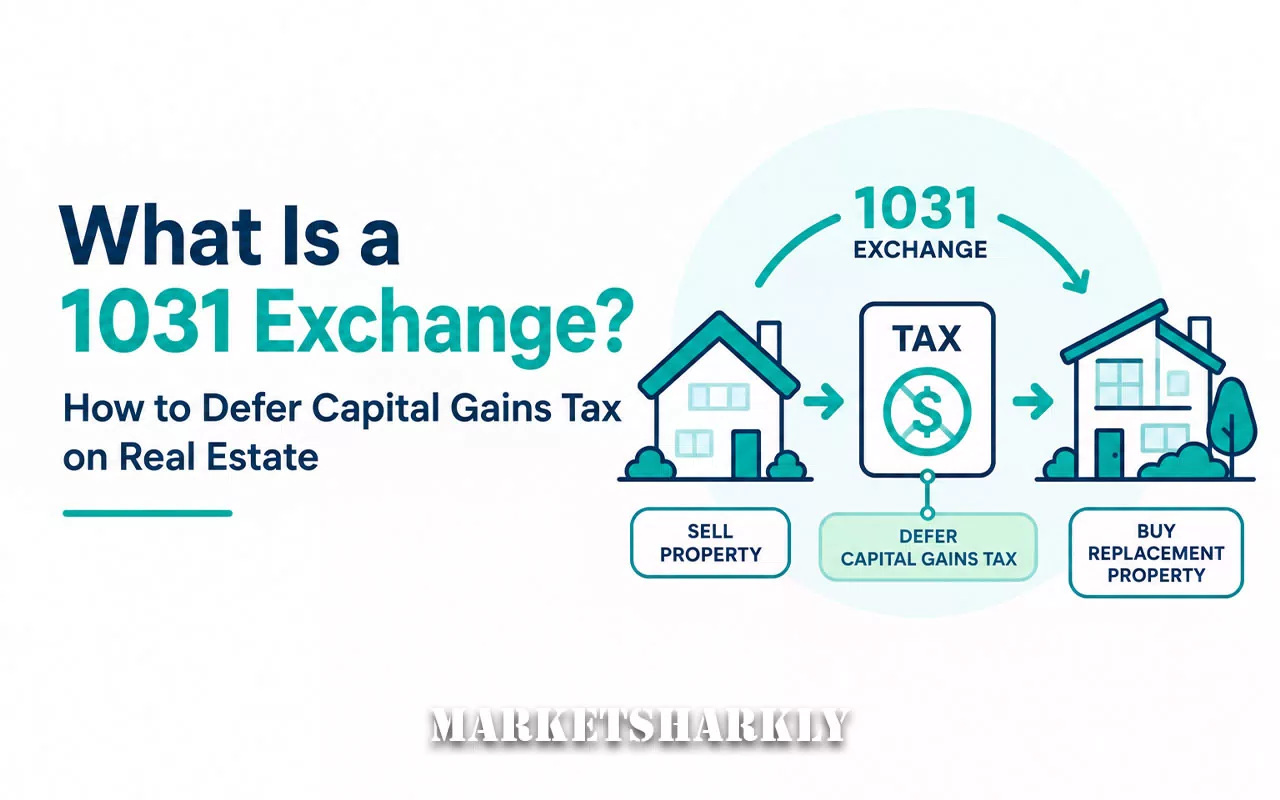
A 1031 exchange — named for Internal Revenue Code Section 1031 — lets an investor sell qualifying real property and defer the capital gains tax that would normally be due, as long as the proceeds are reinvested into another "like-kind" property under a specific set of rules and deadlines. It doesn't eliminate the tax; it postpones it, sometimes for decades, and sometimes permanently if the investor holds the replacement property until death.
What "Like-Kind" Actually Means
A common misconception is that "like-kind" means the replacement property has to closely resemble what was sold — an apartment building for another apartment building, say. That's not the rule. For real estate, like-kind is interpreted broadly: qualifying U.S. real property held for investment or business use can generally be exchanged for any other qualifying U.S. real property held for investment or business use — a rental house for raw land, or a small commercial building for a share in a larger investment property, can all potentially qualify.
What doesn't qualify is more limited but important: a primary residence doesn't qualify, since Section 1031 requires the property be held for investment or business use, not personal use. Property held primarily for resale — like a house flipper's inventory — also generally doesn't qualify, since that's treated as held for sale rather than investment. And since 2018 tax law changes, Section 1031 applies only to real property; personal property (equipment, vehicles, and similar assets) that previously could qualify for like-kind exchange treatment no longer does.
The Two Deadlines That Make or Break the Exchange
A 1031 exchange runs on two strict, calendar-day clocks that both start on the same date — the closing date of the property you sold:
The 45-day identification period. You have 45 calendar days from your closing date to identify potential replacement properties in writing, delivered to your qualified intermediary or another permissible party. Per the IRS's own guidance, this identification must be in writing, signed, and must clearly describe the property — a legal description, street address, or distinguishable name, not a vague reference to "a property somewhere in the area."
The 180-day exchange period. You must close on the replacement property within 180 calendar days of your original closing — or by your tax return's due date (including extensions) for the year of the sale, whichever comes first.
Both deadlines are notably rigid: they're calendar days, not business days, and they don't extend for weekends, holidays, financing delays, or inspection issues. The only general exception is IRS-granted relief for taxpayers affected by a federally declared disaster. Missing either deadline generally disqualifies the exchange entirely, which converts the transaction into a fully taxable sale in the year it closed.
Why You Can't Just Hold the Money Yourself
A defining structural requirement of a standard deferred exchange is that you can never take actual or constructive receipt of the sale proceeds — even briefly, even by accident. If the funds land in your own account at any point, even temporarily, the IRS can treat the transaction as a taxable sale rather than a valid exchange.
This is the entire reason a qualified intermediary (QI) is used: a third party, unrelated to you, holds the sale proceeds and uses them to acquire the replacement property on your behalf, so the money never technically passes through your hands. Engaging a qualified intermediary has to happen before the original property closes — structuring the exchange after the fact isn't possible once you've already received the funds.
A Worked Example: Full Deferral
Say you bought a rental property years ago with a $300,000 basis, and you now sell it for $700,000, realizing a gain of $400,000.
If you reinvest the full proceeds into a replacement property valued at $750,000 (using additional financing to cover the gap, with equal or greater debt than what you had on the relinquished property), and you complete the exchange properly through a qualified intermediary within the 45-day and 180-day windows:
Capital gains tax due right now: $0
The entire $400,000 gain is deferred — not forgiven, deferred — and rolled into the replacement property's basis, meaning it will eventually factor into the taxable gain if and when that replacement property is sold in a fully taxable transaction down the road (or deferred again through another 1031 exchange).
When Deferral Is Only Partial: Understanding "Boot"
Full deferral requires reinvesting proceeds and debt equal to or greater than what you had in the relinquished property. Falling short of that in any respect creates what's called boot — the portion of the transaction that doesn't qualify for deferral and becomes immediately taxable in the year of the exchange.
Using the same $700,000 sale, suppose that instead of reinvesting everything, you only put $600,000 into the replacement property and keep $100,000 in cash for yourself:
Boot (cash not reinvested): $700,000 − $600,000 = $100,000
That $100,000 is taxed immediately, at whatever combined capital gains and Net Investment Income Tax rate applies to your situation (commonly 18.8% for many long-term gains once NIIT applies — the mechanics of exactly how that combined rate works are covered in a dedicated capital gains tax explanation).
Tax due on the boot: $100,000 × 18.8% ≈ $18,800
Remaining gain still deferred: $400,000 − $100,000 = $300,000
A partial exchange like this is entirely legal — you simply accept tax on the boot portion while still deferring the rest, rather than losing the deferral benefit entirely.
Depreciation Recapture Is a Separate Consideration
If you've claimed depreciation deductions on the property being sold (common for rental real estate), that depreciation is subject to its own tax treatment — depreciation recapture — taxed at up to 25%, separately from the standard long-term capital gains rates that apply to the appreciation portion of the gain. A 1031 exchange can defer depreciation recapture along with the rest of the gain, as long as the exchange qualifies for full deferral — but it's a distinct component worth understanding is baked into your total deferred amount, not something separate from it.
Common Ways an Exchange Gets Disqualified
Missing either deadline. As covered above, both the 45-day and 180-day windows are essentially absolute.
Receiving or controlling the proceeds. Even brief actual or constructive control of the sale proceeds outside the qualified intermediary structure can invalidate the exchange.
Identifying the wrong kind of property, or identifying it improperly — vague descriptions, or identification that isn't in writing and properly delivered before the 45-day cutoff, can fail the requirement even if you technically had a property in mind in time.
Using the property for personal purposes. A primary residence, or a property that hasn't genuinely been held for investment or business use, doesn't qualify regardless of how the rest of the exchange is structured.
Frequently Asked Questions
Can I do a 1031 exchange on my primary residence?
No. Section 1031 applies only to property held for investment or productive use in a trade or business — a primary residence doesn't meet that requirement (though a separate home-sale exclusion exists for primary residences, unrelated to Section 1031).
Does the replacement property have to be the exact same type as what I sold?
No. Like-kind for real estate is interpreted broadly — qualifying U.S. investment or business real property can generally be exchanged for other qualifying U.S. investment or business real property, regardless of how different the specific property types are.
What happens if I identify a property within 45 days but the deal falls through?
Depending on how many properties you identified, you may be able to move to an alternate you also identified within that same window — but once the 45-day period ends, your identification list is generally locked, and no substitutions or additions are allowed after that point.
Can I use a 1031 exchange to eventually eliminate the tax entirely, not just defer it?
Indirectly, yes, for some investors — if the replacement property (or a later property from subsequent exchanges) is held until death, an heir can potentially receive it with a "stepped-up" basis under current law, which can eliminate the originally deferred gain rather than simply postponing it further. This is a significant, fact-specific area worth discussing directly with a tax professional given how much it depends on your situation and current law.
Do I need a qualified intermediary for every 1031 exchange?
For a standard deferred exchange — the most common structure, where you sell first and buy the replacement property afterward — yes, a qualified intermediary is essential to avoid taking actual or constructive receipt of the proceeds. Other, less common exchange structures exist with different mechanics.
Key Takeaways
A 1031 exchange defers, rather than eliminates, capital gains tax on qualifying real estate by rolling the gain into a replacement property, provided the transaction follows a strict structure: a qualified intermediary holding the proceeds, replacement property identified in writing within 45 days, and the exchange completed within 180 days.
Falling short of fully reinvesting the proceeds and matching or exceeding the original debt creates "boot" — immediately taxable, even within an otherwise valid exchange — which makes a partial exchange a real, usable middle ground rather than an all-or-nothing choice between full deferral and a fully taxable sale.
Sources
Internal Revenue Service — Like-Kind Exchanges Under IRC Section 1031 (Fact Sheet FS-08-18)
Internal Revenue Service — Instructions for Form 8824, Like-Kind Exchanges
This article is for general educational purposes only and does not constitute financial, investment, tax, or legal advice.