What Are I Bonds (Series I Savings Bonds)? How They Work
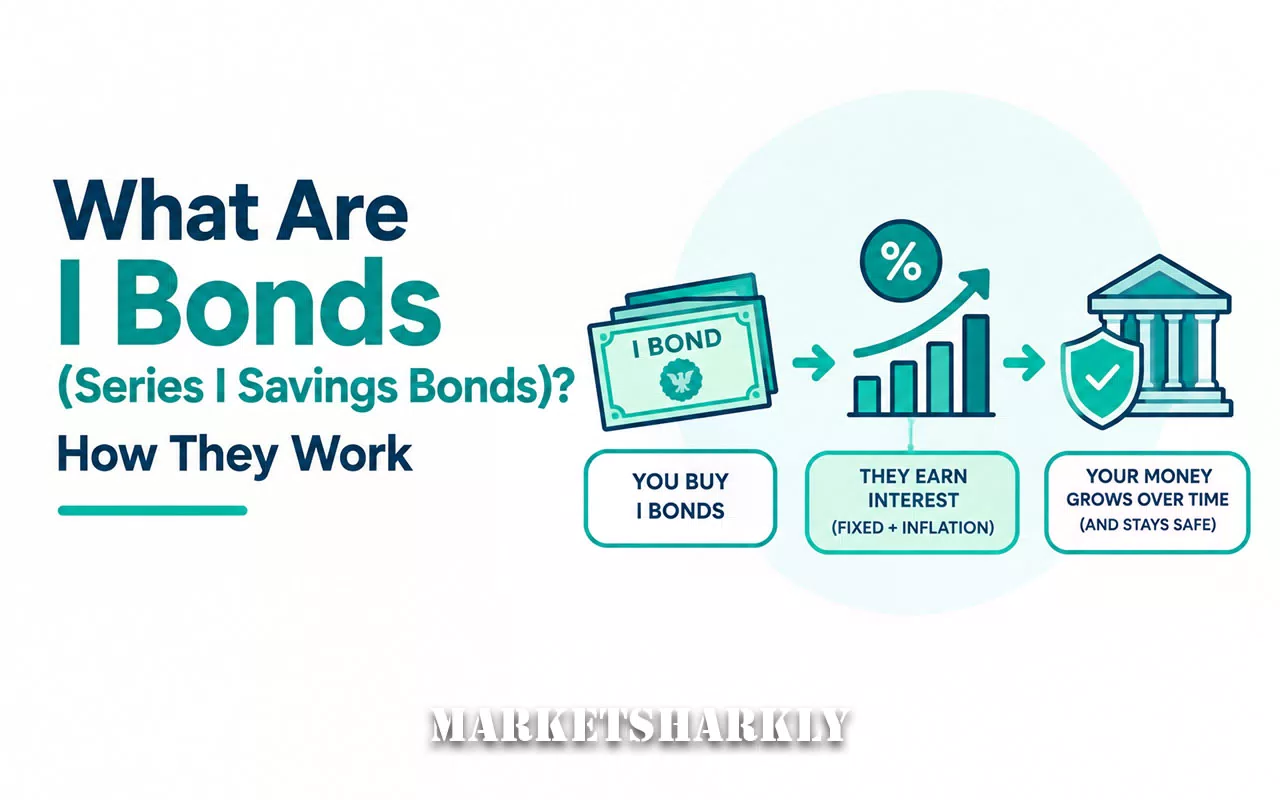
A Series I savings bond is a U.S. Treasury-issued savings bond specifically designed to protect your money from inflation. Unlike a CD or standard savings account with a rate that's either fixed or set purely at a bank's discretion, an I bond's return is built from two separate components — one fixed for life, one that resets with inflation — combined into a single rate.
The Two-Part Composite Rate
Every I bond earns a composite rate made of:
A fixed rate, set by the Treasury and locked in for the entire 30-year life of the bond, unaffected by anything that happens after you buy it.
A semiannual inflation rate, tied to changes in the Consumer Price Index for All Urban Consumers (CPI-U), announced fresh every May 1 and November 1 and applied to all I bonds ever issued, regardless of when they were originally purchased.
These two pieces combine using a specific Treasury formula, not a simple sum:
Composite Rate = Fixed Rate + (2 × Semiannual Inflation Rate) + (Fixed Rate × Semiannual Inflation Rate)
For I bonds issued from May 1 through October 31, 2026, per TreasuryDirect, the fixed rate is 0.90% and the semiannual inflation rate is 1.67%. Plugging those in:
0.0090 + (2 × 0.0167) + (0.0090 × 0.0167) = 0.042550, rounding to a composite rate of 4.26%
That 4.26% applies for the first six months after purchase. After that, the inflation component resets to whatever the Treasury announces next — but your fixed-rate portion, once locked in at purchase, never changes for as long as you hold that specific bond.
Why "Locked In at Purchase" Matters
Because the fixed rate is set only at the moment of purchase and never changes afterward, two people who bought I bonds at different times can hold bonds with permanently different fixed rates, even while both bonds' inflation components move together and reset on the same schedule. A bond bought when the fixed rate was higher keeps that advantage for its full 30-year life; a bond bought when the fixed rate was 0% never gains one, regardless of how the inflation piece behaves later.
This is why "buy I bonds when the fixed rate is attractive" is a genuinely meaningful piece of advice specific to this product — you're not just locking in today's composite rate, you're locking in the fixed-rate floor for potentially three decades.
A Worked Growth Example
Say you buy $10,000 in I bonds and, purely for illustration, the composite rate stays at the current 4.26% for the entire holding period (in reality, the inflation component will move as CPI-U changes every six months — this simplification just isolates the compounding mechanic).
Interest compounds semiannually — every six months, accrued interest gets added to the bond's value, and the next six months' interest is calculated on that new, larger balance.
Value after 5 years (10 semiannual compounding periods): ≈ $12,343
That's the mechanic working in your favor the same way ordinary compound interest does elsewhere — each period's interest becomes part of the balance the next period's interest is calculated against.
The Holding Period Rules: 12 Months Minimum, 5-Year Penalty Window
I bonds come with real liquidity restrictions that a standard savings account doesn't have.
You cannot redeem an I bond at all during the first 12 months — the money is genuinely locked up for a full year from purchase, no exceptions for ordinary circumstances.
If you redeem between 1 and 5 years, you forfeit your most recent 3 months of interest as an early redemption penalty. After 5 years, there's no penalty at all.
What That Penalty Actually Costs
Continuing the example above, say instead of holding for a full 5 years, you redeem at exactly the 4-year mark:
Value at exactly 4 years (8 semiannual periods): ≈ $11,834
Approximate 3-month interest penalty: ≈ $123
Net amount actually received after the penalty: ≈ $11,711
The penalty only claws back the most recent quarter's worth of interest — it never touches your original principal, and it never resets your accumulated gains beyond those specific three months. Still, it's a real cost worth planning around if there's a reasonable chance you'll need the money within that 1-to-5-year window.
I Bonds Can Never Lose Value
Because of how the composite rate formula works, if inflation were ever negative enough to push the calculation below zero, the Treasury floors the composite rate at 0% — an I bond's redemption value never actually declines. This is a meaningfully different risk profile than a bond fund or a security whose price fluctuates with market interest rates; an I bond's stated value only ever goes up or stays flat, never down, though a redemption made too early can still mean the penalty eats into recent gains.
Purchase Limits
Electronic I bonds purchased directly through TreasuryDirect.gov are capped at $10,000 per Social Security Number per calendar year. That limit is per person, not per household, so a married couple can each purchase up to that amount in the same year under their own accounts.
Tax Treatment
I bond interest is exempt from state and local income tax, which is a real advantage for residents of states with meaningful state income tax rates, though it remains subject to federal income tax. That federal tax can generally be deferred until you cash the bond, it stops earning interest at 30 years, or it's transferred to someone else — rather than being taxed annually as it accrues, the way interest in an ordinary savings account is.
Under specific conditions — generally involving using the proceeds for qualified higher education expenses and meeting income limits — some I bond interest may also qualify to be excluded from federal tax entirely, a narrower benefit that depends on meeting the specific requirements at the time of redemption.
I Bonds vs. a High-Yield Savings Account
The two products solve overlapping but distinct problems. A high-yield savings account offers full liquidity with no lockup and no early-withdrawal penalty, but its rate is set purely at the bank's discretion and can be lowered at any time regardless of inflation. An I bond trades that flexibility for a rate structurally tied to inflation and a locked-in fixed-rate floor, at the cost of a mandatory 12-month lockup and a real (if limited) penalty during years one through five.
Because of the 12-month minimum hold, I bonds aren't a fit for money you might need on short notice — that's still better suited to a standard or high-yield savings account. I bonds tend to fit money you're confident you won't need for at least a year, ideally longer, where inflation protection and the tax-deferral feature outweigh the loss of immediate access.
Frequently Asked Questions
Can I lose money on an I bond?
No — the composite rate is floored at 0%, so the bond's value never declines. The only way to come out behind is redeeming within the first 5 years and forfeiting the 3-month interest penalty, which reduces gains but doesn't touch your original principal.
Does the fixed rate change after I buy the bond?
No. The fixed rate is set at the moment of purchase and stays the same for that specific bond's entire 30-year life, even as the inflation component resets every six months.
How often does the interest rate change?
The inflation component resets every six months from your bond's issue date, following new rates the Treasury announces each May 1 and November 1. The fixed component never changes for a given bond.
Is there a penalty if I hold the bond for more than 5 years?
No. The 3-month interest penalty applies only to redemptions made between 1 and 5 years after purchase. After 5 years, you can redeem with no penalty at all, right up until the bond stops earning interest at 30 years.
Can I buy I bonds inside an IRA or 401(k)?
No. I bonds are purchased directly from the Treasury (primarily through TreasuryDirect.gov) as an individual holding — they aren't available as an investment option inside employer retirement plans or brokerage-held IRAs.
Key Takeaways
I bonds combine a fixed rate locked in for life with an inflation-linked component that resets every six months, producing a composite rate that adjusts with CPI-U while never allowing the bond's value to decline. For bonds issued May through October 2026, that composite rate is 4.26%, built from a 0.90% fixed rate and a 1.67% semiannual inflation rate.
The trade-off for that inflation protection is real liquidity restriction: no redemption at all in the first year, and a 3-month interest penalty for redemptions in years one through five — which makes I bonds a fit for money you're confident you won't need on short notice, rather than a replacement for an emergency fund's need for immediate access.
Sources
This article is for general educational purposes only and does not constitute financial, investment, tax, or legal advice.