The 50/30/20 Budget Rule Explained
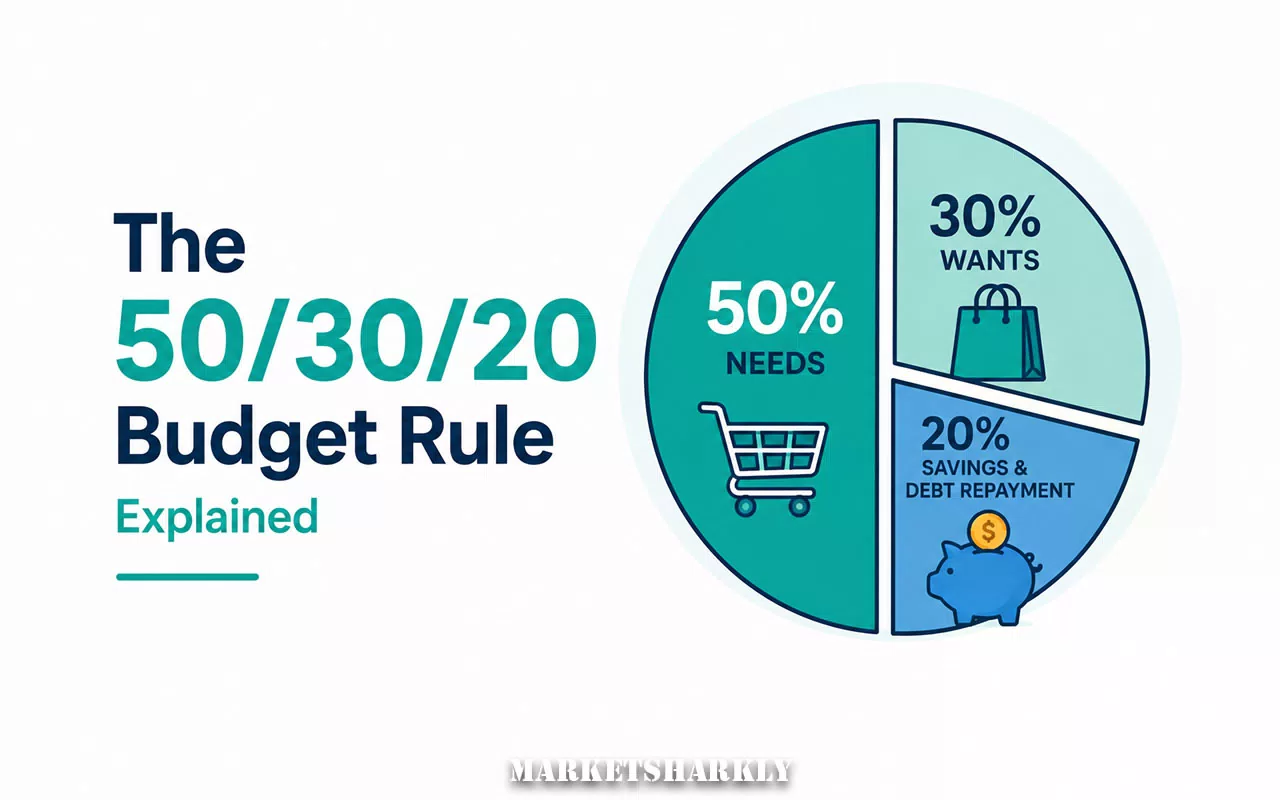
The 50/30/20 rule is a simple budgeting framework that splits your after-tax income into three buckets: 50% toward needs, 30% toward wants, and 20% toward savings and debt repayment. It was popularized by Senator Elizabeth Warren and her daughter, Amelia Warren Tyagi, in their 2005 book All Your Worth: The Ultimate Lifetime Money Plan — Warren herself describes it as a good rule of thumb, not a rigid formula everyone should follow exactly.
Its appeal is its simplicity: instead of tracking dozens of spending categories, you're managing just three.
The Three Categories
Needs (50%) are the expenses you genuinely can't avoid without serious consequences: rent or mortgage, utilities, groceries, minimum debt payments, insurance, and basic transportation to get to work. The test isn't "is this important to me" — it's closer to "would I have a real problem if I stopped paying this."
Wants (30%) cover everything that improves your life but isn't strictly necessary: dining out, streaming subscriptions, entertainment, hobbies, travel, and upgrading something that still works fine. This category is inherently more personal than "needs" — one person's want is another's non-negotiable, and the rule doesn't try to police that distinction for you.
Savings and debt repayment (20%) covers building an emergency fund, contributing to retirement accounts, additional payments on debt beyond the required minimum, and general investing. Minimum debt payments themselves fall under "needs" — this 20% specifically refers to extra, beyond-the-minimum progress toward savings or debt payoff.
A Worked Example
On a $4,800 monthly after-tax income:
Needs: $4,800 × 50% = $2,400
Wants: $4,800 × 30% = $1,440
Savings/debt repayment: $4,800 × 20% = $960
That $960 isn't necessarily one single destination — it might split across a few things at once: a portion automated into a savings account, a portion into a 401(k) or IRA, and a portion toward extra payments on a credit card or loan balance.
Where the Rule Breaks Down: Income Level
The most common, and most legitimate, criticism of the 50/30/20 rule is that it doesn't scale evenly across income levels, because needs don't move proportionally with income the way the rule implicitly assumes.
Take a household with $2,600 in monthly after-tax income, in a location where genuinely essential costs — rent, utilities, groceries, transportation — realistically total $1,900. That's 73% of income just on needs, not 50%, leaving only $700 combined for wants and savings. Following the rule's 50% needs target isn't really optional here; the actual cost of necessities has already blown past it, and there's no way to force baseline survival costs down to an arbitrary percentage.
On the other end, a household earning well above the median may find that 50% comfortably covers needs with plenty left over, at which point sticking rigidly to 30% wants and only 20% savings can mean under-saving relative to what that income could actually support — someone earning significantly more has more capacity to push savings well beyond 20% without any real lifestyle sacrifice.
Where the Rule Breaks Down: High-Interest Debt
The rule treats "savings" and "debt repayment" as a single, interchangeable 20% bucket, but that framing can undersell how urgent high-interest debt payoff often is. Money earning, say, a 4–5% return in a savings account while a credit card balance accrues interest at 20%+ isn't a wash — the guaranteed "return" of paying down high-interest debt often outweighs the benefit of simultaneously building savings at a normal rate, which is part of why some proponents of the rule specifically emphasize attacking high-interest debt aggressively within that 20% bucket rather than splitting it evenly with savings.
The Rule Is a Starting Point, Not a Mandate
Warren's own framing — "a good rule of thumb" — matters here. The value of 50/30/20 isn't that the specific percentages are correct for everyone; it's that having any consistent, three-category structure is more sustainable for most people than either no budget at all or an overly granular line-item budget that becomes tedious enough to abandon within a few months.
Common, reasonable variations include:
Adjusting to something like 60/20/20 or 55/25/20 in a higher cost-of-living area where needs genuinely take up more of the budget
Temporarily shifting more into the savings/debt bucket during a high-income period, or more into needs during a lower-income stretch
Splitting the 20% bucket explicitly — for example, 10% to an emergency fund and retirement, 10% to extra debt payoff — rather than treating it as one undifferentiated pool
What Counts as "After-Tax Income"
Getting the percentages right depends on starting from the correct base number. After-tax income means what actually lands in your bank account — after federal and state income tax, Social Security, and Medicare are withheld. If your employer also deducts things like health insurance premiums or retirement contributions directly from your paycheck before you receive it, that money is already gone from the number you're budgeting against, which is worth keeping in mind if you're trying to reconcile the 50/30/20 percentages against your gross salary instead of your actual take-home pay.
Frequently Asked Questions
Is the 50/30/20 rule official financial guidance?
No. It's a budgeting framework popularized in a specific personal finance book, not a rule from a regulator or government agency. It's widely referenced by financial institutions and planners as a starting heuristic, not a mandated standard.
What if my needs are more than 50% of my income?
This is common, particularly in higher cost-of-living areas or on lower incomes, and it doesn't mean you're doing something wrong — it means the fixed 50/30/20 split doesn't fit your specific cost structure, and adjusting the percentages to reflect your real numbers is more useful than forcing an unrealistic target.
Should minimum debt payments count as a need or the savings/debt bucket?
Minimum required payments are generally treated as a need, since missing them has real consequences. The 20% savings/debt bucket refers to payments beyond the required minimum.
Is 20% savings realistic for everyone?
Not necessarily, especially at lower income levels where needs consume a larger share of the budget by necessity. The framework is meant as a target to work toward, not a threshold everyone can hit immediately regardless of income.
How is this different from a zero-based budget?
A zero-based budget assigns every dollar of income to a specific category until nothing is left unaccounted for, which requires more detailed tracking. The 50/30/20 rule is intentionally broader — three categories instead of many — trading precision for simplicity.
Key Takeaways
The 50/30/20 rule splits after-tax income into needs (50%), wants (30%), and savings or extra debt repayment (20%) — a framework popularized by Elizabeth Warren specifically for its simplicity, not because the exact percentages are correct for every income level or cost of living.
Its real value is giving people a consistent, low-effort structure to build a budgeting habit around. Its real limitation is that it doesn't scale evenly — lower incomes in expensive areas often can't fit needs into 50%, and higher incomes often can afford to save well beyond 20% — which makes it a starting framework to adjust from, not a fixed target to hit exactly.
Sources
Warren, Elizabeth, and Amelia Warren Tyagi. All Your Worth: The Ultimate Lifetime Money Plan. Free Press, 2005.
This article is for general educational purposes only and does not constitute financial, investment, tax, or legal advice.
Last updated: August 2026