Term vs. Whole Life Insurance: What's the Difference?
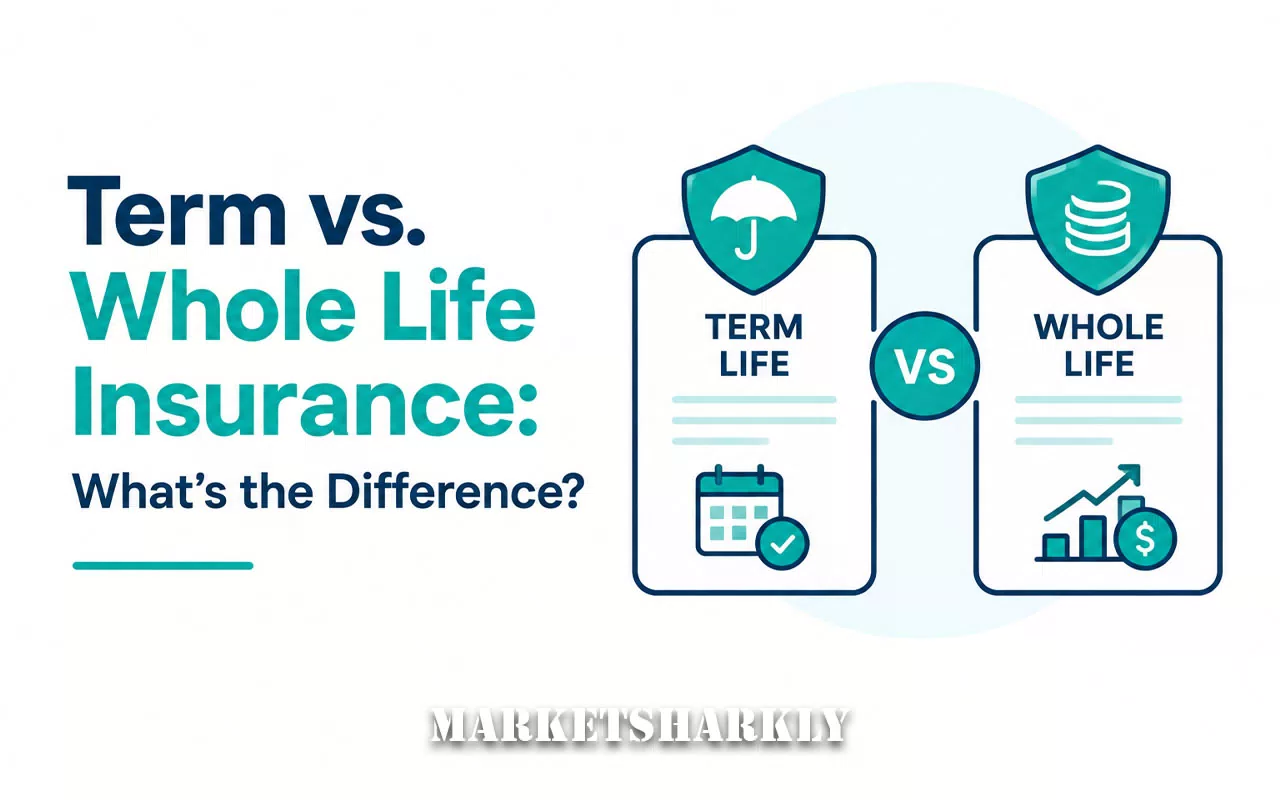
Life insurance exists to replace your income or cover specific financial obligations for the people who depend on you, in the event you die. The two foundational structures — term and whole life — solve that problem in fundamentally different ways: one provides coverage for a defined stretch of time at the lowest possible cost; the other provides coverage for your entire life while also building a savings-like component along the way. Neither is universally "better" — they answer different questions, and confusing them is where a lot of people end up either overpaying or underinsured.
Term Life Insurance: The Basics
The National Association of Insurance Commissioners (NAIC) describes term insurance simply as lower-cost coverage purchased for a specified period. That period is commonly 10, 20, or 30 years, with the premium generally staying level for the entire term. If you die during that window, your beneficiaries receive the death benefit. If you outlive the term, the policy simply ends — there's no payout, no refund of premiums (unless you specifically purchased a return-of-premium rider), and no remaining value.
Term policies build no cash value at all. Every dollar of premium goes toward the cost of the insurance coverage itself for that period, which is exactly why term is dramatically cheaper than permanent coverage for the same death benefit.
Most term policies come with a conversion option, letting you convert some or all of the coverage into a permanent policy within a specified window, generally without new medical underwriting — useful if your health changes and you later decide you want permanent coverage. The NAIC specifically notes that if you renew a term policy past its level-premium period rather than converting or requalifying, the renewal premium is generally recalculated based on your now-older age, and tends to increase substantially.
Whole Life Insurance: The Basics
Whole life insurance is a form of permanent insurance — coverage designed to remain in force for your entire life, as long as premiums are paid, rather than expiring after a set term. The NAIC describes it as a type of cash-value insurance: part of every premium payment goes toward the cost of insurance, and part goes into a cash value account that accumulates over time, growing on a tax-deferred basis.
That cash value is accessible while you're alive — policyholders can generally borrow against it, or in some cases withdraw from it — which is a meaningfully different structure from term, where the policy has no living value to draw on at all. Borrowing against the cash value isn't free, though: unpaid policy loans accrue interest, and any outstanding loan balance reduces the death benefit your beneficiaries eventually receive if it isn't repaid.
Whole life typically uses a fixed, structured premium schedule — the payment amount doesn't change over time — and by law, whole life policies are required to include nonforfeiture values, meaning the policyholder retains some rights to the accumulated cash value even if they stop paying premiums, rather than simply losing everything paid in.
Why Whole Life Costs So Much More
Because whole life is funding both a lifelong death benefit and a cash value account, its premiums run substantially higher than a term policy with the same face amount — commonly cited as roughly an order of magnitude higher for comparable coverage. That gap is the central trade-off worth understanding clearly before choosing between the two.
A Worked Example: "Buy Term and Invest the Difference"
Say a healthy adult is comparing two $500,000 policies: a 20-year term policy running about $30/month, versus a whole life policy for the same face amount running about $300/month — a roughly 10x difference, consistent with the typical gap between the two structures.
Monthly premium difference: $300 − $30 = $270
If that $270/month difference were instead invested every month at a hypothetical 7% average annual return over 30 years:
Future value of the invested difference after 30 years: ≈ $329,392
Compare the total amount paid into each option over that same 30-year span:
Total term premiums paid: $30 × 360 months = $10,800
Total whole life premiums paid: $300 × 360 months = $108,000
This is the mathematical core of the "buy term and invest the difference" strategy that comes up constantly in personal finance discussions: term insurance's dramatically lower cost frees up a large amount of money that, if actually invested with discipline, can potentially grow to exceed what a whole life policy's cash value would have accumulated over the same period — while also providing the same death benefit during the term. The strategy's success depends entirely on the "invest the difference" part actually happening consistently, though; the math only works out if that freed-up money is genuinely invested rather than spent.
What Whole Life Offers That This Comparison Doesn't Capture
The math above isn't the whole picture, and whole life advocates raise legitimate points that a pure cost comparison misses:
Guaranteed lifelong coverage. Term insurance ends. If you outlive every term policy you've ever held and still want coverage in your 70s or 80s — for final expenses, estate planning, or a dependent who never became financially independent — a new policy at that age can be extremely expensive or medically difficult to qualify for at all. Whole life sidesteps that entirely by design.
Forced, guaranteed savings with principal protection. Whole life's cash value grows on guaranteed terms set by the policy, insulated from market volatility — a genuinely different risk profile than "invest the difference in the market," which depends on actual investment discipline and carries real market risk that a whole life cash value doesn't.
Tax-deferred growth accessible during your lifetime, which can serve specific estate planning or supplemental retirement funding purposes for someone who has already maximized other tax-advantaged accounts.
Universal Life: A Related but Distinct Third Option
Universal life insurance is another permanent structure, but with more flexibility than traditional whole life — it combines insurance coverage with a cash value account that earns interest, while generally allowing the policyholder more latitude to adjust premium payments and the death benefit amount over time, within the policy's limits. The policy stays in force as long as the accumulated cash value remains sufficient to cover ongoing insurance costs. Some universal life products, called variable universal life, place the cash value into investment subaccounts, meaning the cash value can rise or fall with those investments' performance rather than growing at a fixed guaranteed rate.
Is the Death Benefit Actually Tax-Free?
Generally yes, for both term and whole life. Under federal tax law, life insurance death benefits paid to a beneficiary due to the insured's death are generally excluded from the beneficiary's taxable income. This is a meaningful, often underappreciated feature of life insurance as a wealth-transfer tool compared to many other financial assets, which typically don't pass to heirs completely free of income tax.
Which One Tends to Fit Which Situation
Term life tends to fit people who need coverage during a specific, identifiable window of financial responsibility — while raising children, paying down a mortgage, or during peak earning years before other assets (retirement accounts, home equity) have had time to build up. It's also the more accessible option for a given budget, since the same premium dollar buys substantially more death benefit as term than as whole life.
Whole life tends to fit people with a genuine need for coverage that has no natural end date — certain estate planning goals, providing for a dependent with lifelong care needs, or specific business succession purposes — combined with the discipline and cash flow to sustain higher premiums indefinitely, alongside (not instead of) other retirement and investment vehicles.
Frequently Asked Questions
Can I convert a term policy into a whole life policy later?
Many term policies include a conversion option allowing this within a specified window, generally without new medical underwriting — worth checking your specific policy's terms, since not all term policies include this feature or the same conversion window.
What happens to my cash value if I stop paying premiums on a whole life policy?
State law requires whole life policies to include nonforfeiture values, meaning you retain some rights to the accumulated cash value even if you stop paying — options can include a reduced paid-up policy or an extended term policy funded by the existing cash value, depending on your specific contract.
Is whole life ever a bad idea?
It can be a mismatch for someone who takes on a large permanent premium obligation they can't sustain long-term, since lapsing a whole life policy after years of premiums can mean losing much of the value built up. It's generally better suited to a well-planned, long-term financial strategy than as an ad hoc purchase.
Does term life insurance ever build cash value?
No, standard term insurance builds no cash value under any circumstances — it's pure, temporary death-benefit protection with no living value component, which is exactly why it's so much cheaper than permanent insurance for the same face amount.
How much life insurance do I actually need?
This depends on individual factors — income replacement needs, outstanding debts, dependents' ages, and existing savings — rather than a single universal formula, though many approaches start from a multiple of annual income adjusted for specific debts and future obligations like education costs.
Key Takeaways
Term life insurance provides temporary, low-cost coverage for a defined period with no cash value, while whole life insurance provides permanent, lifelong coverage bundled with a tax-deferred cash value component — at a substantially higher premium, commonly on the order of ten times more for the same death benefit.
The "buy term and invest the difference" comparison shows why that cost gap matters mathematically, but it isn't a complete answer on its own: whole life's guaranteed lifetime coverage and principal-protected cash growth address real needs that a term-plus-investing strategy doesn't automatically replicate, particularly for people with a genuine need for coverage that has no natural expiration date.
Sources
National Association of Insurance Commissioners — Insurance Topics: Life Insurance
National Association of Insurance Commissioners — Consumer Insight: Life Insurance Roadmap
Internal Revenue Service — Publication 525, Taxable and Nontaxable Income
This article is for general educational purposes only and does not constitute financial, investment, tax, or legal advice.