Emergency Funds: How Much Should You Save?
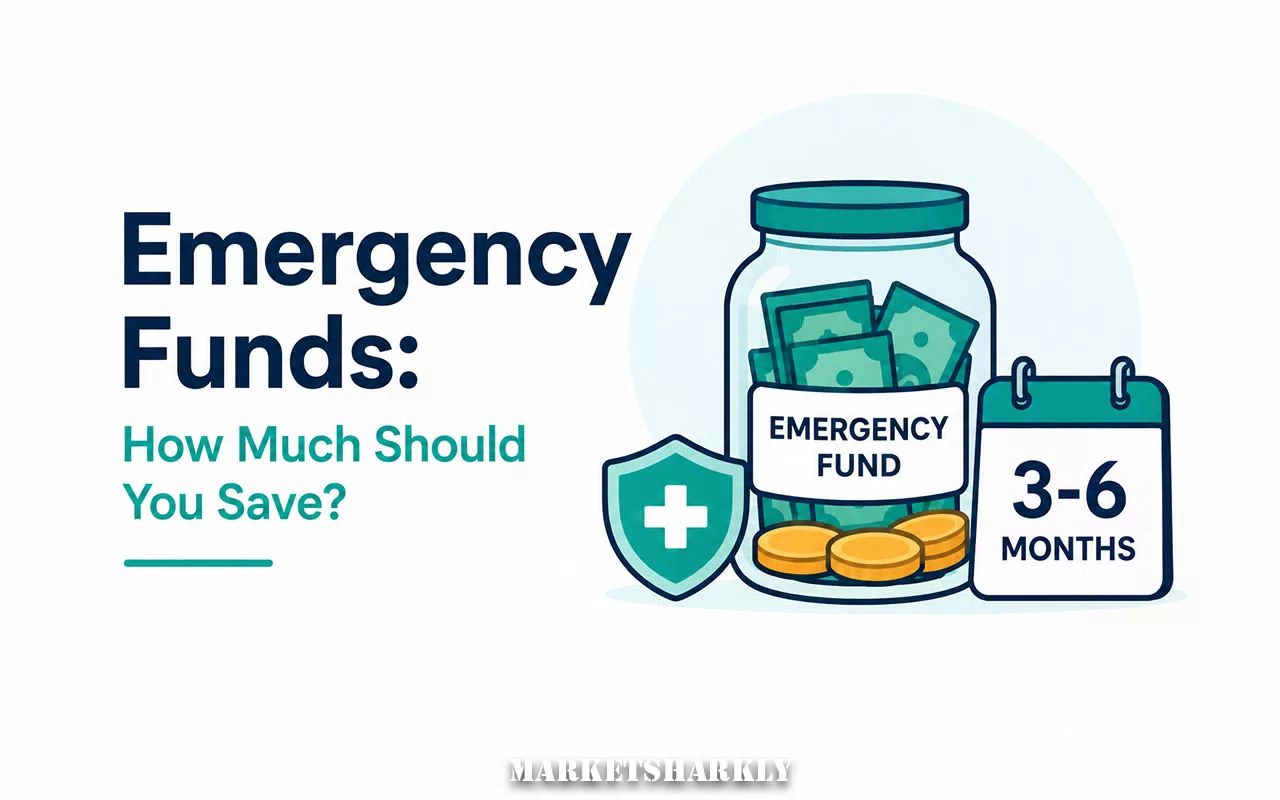
An emergency fund is money set aside specifically for unplanned expenses or a loss of income — a job loss, an urgent car repair, a medical bill — kept separate from the money you use for everyday spending. The common advice is "three to six months of expenses," but that number is a starting heuristic, not a rule handed down by regulation, and the research behind it is more nuanced than the soundbite suggests.
What the CFPB Actually Says
It's worth being precise here, because a lot of emergency fund content states this as settled: the Consumer Financial Protection Bureau does not attach a single dollar figure or fixed number of months to its guidance. Instead, the CFPB frames the right amount as dependent on your own situation — job stability, household size, typical costs, and the kinds of unexpected expenses you're most likely to actually face.
What the CFPB has studied directly, through its Making Ends Meet survey paired with credit bureau data, is what happens to people at different savings levels. Comparing consumers with no emergency savings, some savings, and more savings, the research found stark differences: people with no emergency savings were far more likely to lack a basic savings account at all, have no access to revolving credit, have recently used a payday or auto title loan, and struggle to pay bills — and dramatically more likely to say their finances often or always feel out of their control.
The takeaway from the CFPB's own research isn't "you need exactly three to six months" — it's that having some emergency savings, even a modest amount, is associated with meaningfully better financial stability than having none, and that the jump from zero to something matters more than hitting a precise target number.
Why "Three to Six Months" Became the Standard Anyway
The three-to-six-months framework shows up across many financial institutions and advisors as a general rule of thumb, generally justified as enough time to find new work or recover from a major unplanned cost without going into debt. It's a reasonable starting heuristic, but it isn't one-size-fits-all, and personal finance experts genuinely disagree on the right range — some recommend as little as three months, others recommend eight to twelve, particularly for less stable income situations.
Where you land within (or outside) that range reasonably depends on:
Job stability and how in-demand your skills are. Someone in a field with high demand and quick rehiring prospects may reasonably lean toward the shorter end. Someone in a more specialized or currently contracting field may want more buffer.
Number of income earners in the household. A household with two incomes has more built-in redundancy than one relying on a single earner — if one income stops, the other is still coming in.
Income stability and type. Freelance, commission-based, or otherwise variable income generally benefits from a larger cushion than steady salaried income, since the "loss of income" scenario is less binary.
Dependents and fixed obligations. More people relying on the same income, or less flexibility to cut expenses quickly, generally points toward a larger target.
How to Calculate Your Own Target
Rather than guessing at a months multiplier in the abstract, the more useful exercise is starting from your actual essential monthly expenses — not your full spending, just what you'd have to keep paying no matter what: housing, utilities, groceries, transportation, insurance, and minimum debt payments. Discretionary spending — dining out, subscriptions, entertainment — generally isn't part of this baseline, since it's exactly the kind of spending most people would cut first in an actual emergency.
For example, if your essential monthly expenses come to $3,400:
3-month target: $3,400 × 3 = $10,200
6-month target: $3,400 × 6 = $20,400
Your own real number — not a national average, not what a specific expert online recommends — is the one worth building toward, since it's grounded in what you'd actually need to keep your household running.
The Case for a "Starter" Fund First
For many households, jumping straight to a full three-to-six-month target isn't realistic in the short term, and treating it as an all-or-nothing goal can be discouraging enough to delay starting at all. A commonly used approach is building a smaller starter emergency fund first — often cited around $1,000 — specifically to absorb smaller shocks (a car repair, an unexpected bill) without resorting to a credit card or high-interest loan, before working toward the larger, fully-funded target.
Using the $10,200 three-month target from above, a $1,000 starter fund still leaves a $9,200 gap to the fuller goal — a real distance, but the point of the two-stage approach is that the starter fund is already doing real protective work against smaller emergencies well before that larger number is reached.
The pace matters more than it might seem. At $200 saved per month, reaching that same $10,200 target takes about 51 months — over four years. Doubling the monthly savings rate to $400 cuts that to roughly 25.5 months. This is less a reason to feel behind and more a reason to treat the rate of saving, not just the end target, as something worth actively working on — automating transfers and looking for ways to increase the monthly amount will move the timeline more than optimizing which specific months-multiplier to aim for.
Where to Keep an Emergency Fund
An emergency fund's job is to be safe and available when you need it — not to maximize returns. That generally rules out locking it in something like a CD with an early withdrawal penalty, or investing it in the stock market, where you could be forced to sell at a loss exactly when you need the cash most.
A standard or high-yield savings account is the most common home for emergency savings, since it keeps the money liquid while still earning some return — the CFPB specifically recommends setting up recurring automatic transfers into a dedicated account, since automating the habit removes the need to make a fresh saving decision every payday.
Frequently Asked Questions
Does the CFPB officially recommend three to six months?
Not as a fixed rule. The CFPB's own guidance frames the right amount as dependent on your personal circumstances, and its research emphasizes that having some emergency savings matters more than hitting any specific number.
Is $1,000 really enough for an emergency fund?
As a full emergency fund, generally not — but as a starter fund meant to prevent smaller, more common emergencies from turning into high-interest debt, it can meaningfully change your financial position even before you reach a larger target.
Should I pay off debt or build an emergency fund first?
This is genuinely debated among financial experts, and reasonable approaches differ — some prioritize a small starter fund before aggressive debt payoff specifically so a new emergency doesn't create more debt in the process, while others prioritize high-interest debt first. There's no single universally agreed answer.
Should my emergency fund be invested for growth?
Generally not the primary emergency fund — the point of the money is being available without risk of loss right when you need it, which favors a liquid, stable account over market-exposed investments.
How do I know if I have "enough"?
There's no external test that certifies your number as sufficient. The most useful check is whether your target realistically covers your essential expenses for the length of time you'd plausibly need to recover from your most likely emergency scenarios, given your specific job stability and household situation.
Key Takeaways
An emergency fund is money set aside specifically for unplanned expenses or income loss, and while "three to six months of expenses" is a widely repeated starting point, it isn't a fixed rule from the CFPB or any regulator — the right target depends on your job stability, income type, household size, and personal risk tolerance.
What the CFPB's own research does support clearly is that having some emergency savings, even a modest starter amount, is strongly associated with better financial stability than having none — which makes starting, and building the habit of saving consistently, more important than getting the exact target number right on the first try.
Sources
This article is for general educational purposes only and does not constitute financial, investment, tax, or legal advice.
Last updated: August 2026